
Technical guidance
Technical answers for better guarding decisions.
Plain-English guidance on machine guards, access devices, protective systems, retrofits, validation and project planning—written for industrial buyers and engineering teams.
Evidence-led content
Start with the question behind the component.
The useful question is rarely “which switch should I buy?” It is “what exposure must be controlled, how is access required and what safe response should occur?”
Each guide gives a direct answer first, then explains the engineering decisions and where project-specific assessment remains necessary.
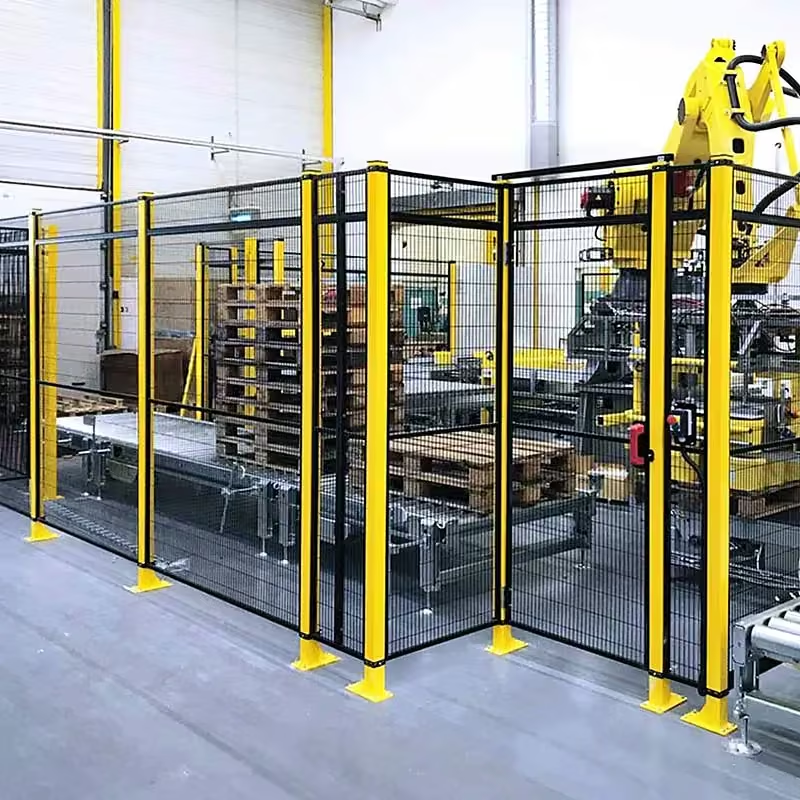
Robot Cell Guarding: A Complete Project Guide
How fencing, access, sensing and reset control fit together.
Read technical guide →
Machine Guarding Risk Assessment
A practical path from hazard and task to safeguarding concept.
Read technical guide →
Fixed Guards vs Interlocked Guards
Choose the access method based on task frequency and required response.
Read technical guide →
Machine Guarding Safety Distances
Understand openings, reach routes and protective-device positioning.
Read technical guide →
Light Curtain vs Laser Scanner
Compare field geometry, stopping distance, access and environment.
Read technical guide →
Retrofitting Older Machinery
Key questions before adding modern guarding to legacy controls.
Read technical guide →
Writing Safety-Function Requirements
Define safe state, reset, diagnostics and validation criteria.
Read technical guide →
Preventing Unexpected Restart
Control reset, power restoration and whole-body access.
Read technical guide →
Interlock or Guard Locking?
Understand position monitoring versus controlled guard release.
Read technical guide →
Protecting Material Openings
Use geometry, tunnels, sensing and muting to control access.
Read technical guide →
Machine Safety Validation Plan
Structure functional, timing and fault tests with clear evidence.
Read technical guide →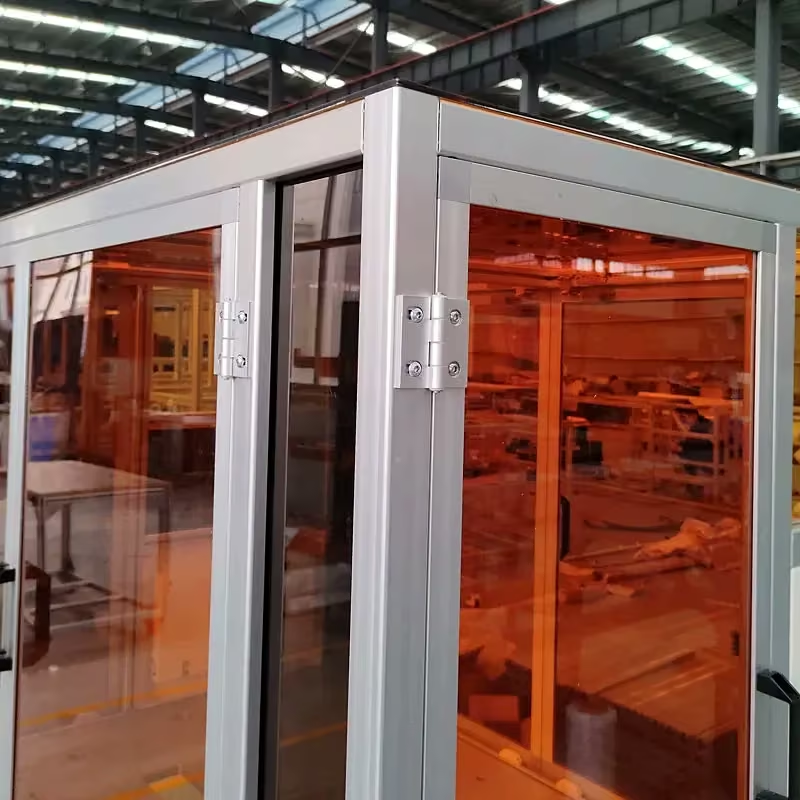
Mesh, Polycarbonate or Solid Sheet?
Select guard materials around visibility, impact and environment.
Read technical guide →
Imported Machinery: UK Safety Checks
PUWER, conformity evidence, guarding and acceptance checks before imported equipment enters production.
Read technical guide →Machine Guarding Cost Guide
Understand the engineering, hardware, installation and validation factors that shape project cost.
Read technical guide →PUWER Regulation 11 Explained
The dangerous-parts hierarchy and what it means for fixed guards, interlocks and protective devices.
Read technical guide →Stop Time and Safety Distance
How measured stopping performance influences light-curtain and laser-scanner positioning.
Read technical guide →Information for a Guarding Quote
Prepare photographs, dimensions, tasks, controls and site constraints for an accurate project scope.
Read technical guide →Types of Machine Guards
Compare fixed, interlocked, guard-locked, adjustable and presence-sensing safeguards.
Read technical guide →Machine Safety Glossary
Plain-English definitions for guarding, PUWER, safety controls, PLr, muting and validation.
Read technical guide →
How Often Should Guards Be Inspected?
Set risk-based pre-use, planned and functional inspection intervals for guards and safety devices.
Read technical guide →Technical scope
Guidance supports—but does not replace—machine-specific engineering.
Equipment condition, foreseeable tasks, stopping performance, control architecture and the legal context of a modification can change the correct route. Use the guides to prepare the right questions and evidence for a project review.