
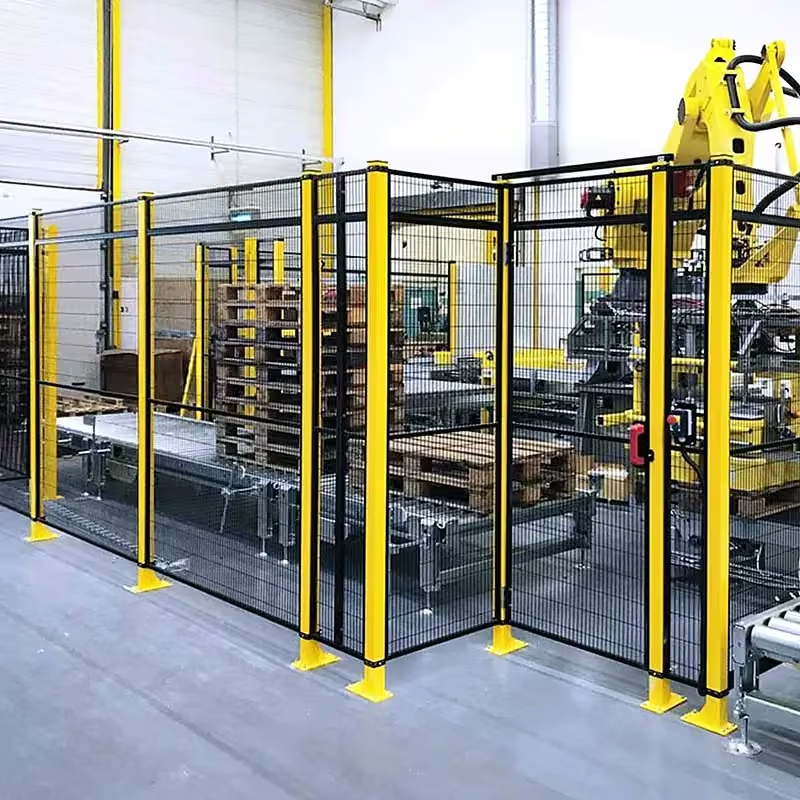
Map the complete hazard envelope
Include robot reach, stopping movement, tool extension, dropped or ejected parts, fixtures, conveyors and secondary processes such as welding or cutting.
Define operating modes
Automatic, manual, teach, maintenance, recovery and loading modes have different access and control requirements.
Set the physical boundary
Position fencing and panels to prevent reach and withstand foreseeable loads while preserving maintenance and escape access.
Engineer gates and whole-body entry
Use suitable interlocking, guard locking, request-to-enter, escape release, trapped keys or presence detection. Define who controls restart.
Protect material openings
Use tunnels, light curtains, muting, scanners, flaps or controlled transfer systems so product can move without creating an unprotected route.
Consider collaborative operation carefully
Assess the complete application, including tool and workpiece. Collaborative features do not remove the need for risk assessment or additional safeguards.
Integrate safety controls
Define safe stop, emergency stop, safe speed, enabling devices, zone control and drive functions across the robot and associated machinery.
Validate the cell
Test each access point, field, mode, reset, restart, fault condition and recovery sequence. Confirm visibility and anti-trap measures.
Project checklist
Points to confirm
- Robot and tooling envelope mapped
- All cell hazards included
- Operating modes defined
- Fence distances checked
- Gate locking assessed
- Whole-body entry controlled
- Material openings protected
- Reset visibility checked
- Safety functions validated
- Documentation handed over
How Oxford Machine Guarding can help
We can survey the equipment, define the guarding and safety-system scope, develop the design, supply and install the solution, and provide testing and handover records appropriate to the agreed project boundary.
This guide provides general technical information. It is not a substitute for a machine-specific risk assessment, legal advice or verification by the responsible dutyholder.
