
Protective devices and control functions
Protective devices selected by function, not by familiarity.
The right device depends on the hazard, access pattern, stopping behaviour, environment and foreseeable defeat—not simply what has been used elsewhere.
Engineering approach
Device, logic and machine response must agree.
We define the complete safety function so sensors, logic, outputs, reset and fault behaviour can be engineered and tested.
Complete capability
Industrial Safety Systems.
Select a system to explore the engineering decisions, application constraints and typical project output.

Safety Light Curtains
Open access protection where stopping performance and reach routes support the application.
Explore →
Safety Laser Scanners
Configurable protective fields for open cells, zones and changing access conditions.
Explore →
Interlock Switches
Coded, tongue, hinge and non-contact monitoring for movable guards.
Explore →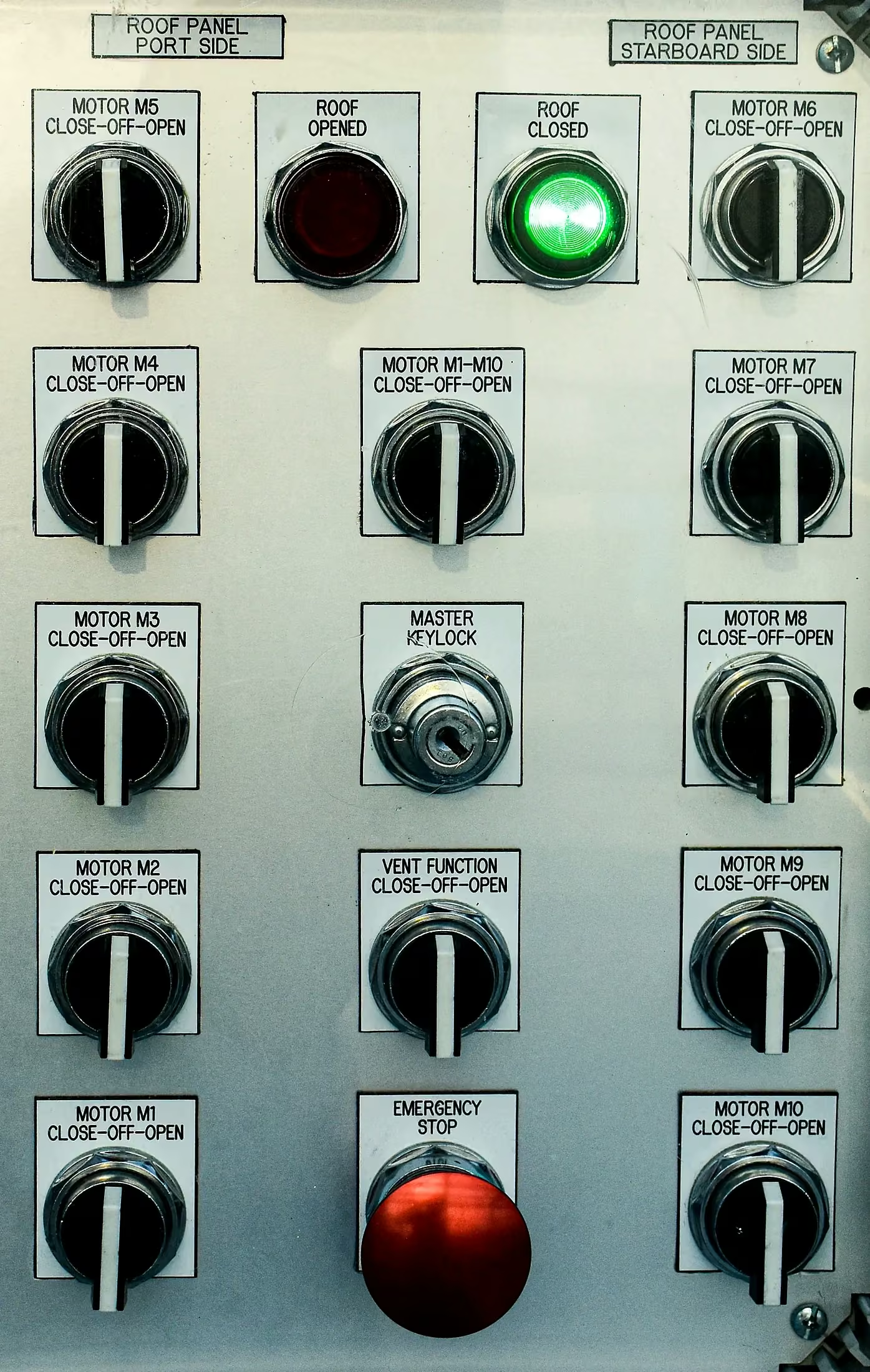
Guard Locking
Controlled release where run-down or retained hazards remain after a stop request.
Explore →
Safety Relays & PLCs
Logic and architecture for clearly defined machine safety functions and diagnostics.
Explore →
Trapped-Key Systems
Physical key sequences for isolation, exchange and controlled whole-body access.
Explore →
Emergency Stop Systems
Device layout, circuit integration and zone response for emergency intervention.
Explore →
Muting & Transfer Systems
Protected material flow through guarded boundaries and conveyor openings.
Explore →
Safety Mats & Edges
Pressure-sensitive devices for presence and contact detection.
Explore →
Reset & Restart Controls
Human-machine interfaces that support safe acknowledgement and restart behaviour.
Explore →
Start with evidence
A useful proposal begins with the machine and the task.
Photographs, dimensions, access requirements, stop behaviour and control information help us determine whether a desk review or site survey is the right next step.
Send project information