

Mechanical movement, ejection, stored energy, heat and process-specific risks are reviewed around the real machine.
MACHINE GUARDING · SAFETY SYSTEMSOXFORDSHIRE · GREAT BRITAIN
Protect people · maintain access · keep production moving
Engineered separation.
Integrated safety.
Bespoke guards and integrated safety systems designed around your machinery, access needs and production targets—from first survey to completed handover.
01 Built around your machine02 Practical access for your team03 Installed and documented
Local engineering teamOxfordshire
Installation coverageGreat Britain
One project partnerSurvey to handover
Your outcomeSafer, maintainable production
Designed around your operation
Protect your people without making the machine harder to use.
We bring the physical guarding, access strategy and safety-system interface together as one accountable package.
Your operators, cleaners and engineers need the right access at the right time. We consider production, changeovers, fault recovery and maintenance before setting the guard line or selecting a safety device.
Routine production, cleaning, adjustment, fault recovery and engineering access are built into the guarding concept.
We establish when the machine must stop, remain locked, prevent restart or allow a controlled material transfer.
Guarding solutions for your machinery
Protection that fits your equipment, people and production flow.
Choose from robot-cell fencing, machine enclosures, conveyor guards and controlled access systems—designed for day-to-day operation and maintenance.
Find the right guarding solution →
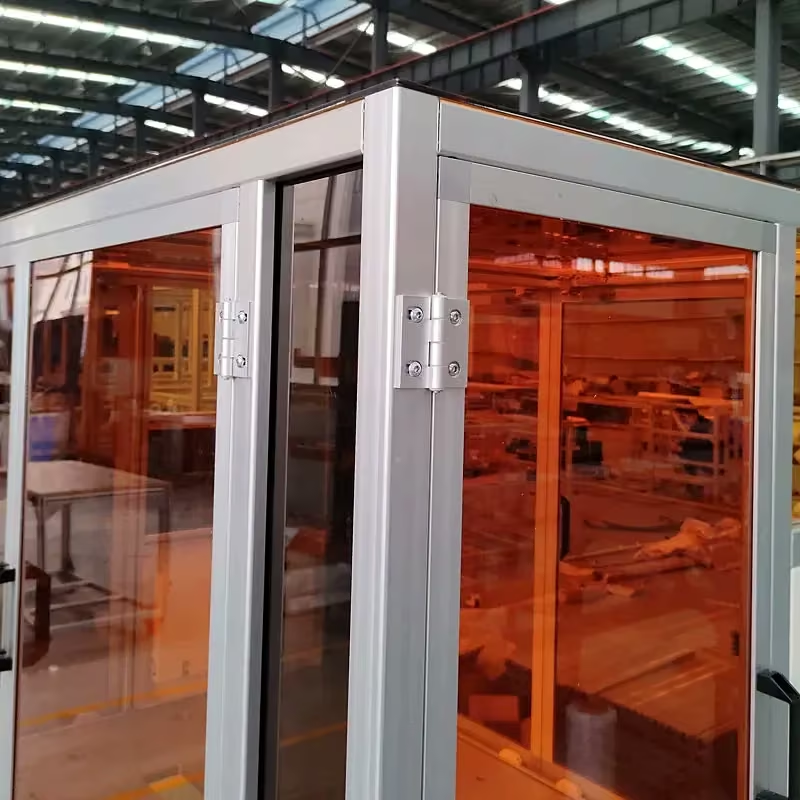

Interactive system view
Anatomy of a safeguarded cell.
Select a system point to see how physical guarding, access devices and control functions work together. The final architecture is application-specific.

Protective devices and controls
The device is only one part of the safety function.
Selection must account for access frequency, stopping performance, bypass risk, environmental conditions and the required reset behaviour.
Explore safety systems →
Interlock switches
Monitored access for doors, hatches and removable guards.
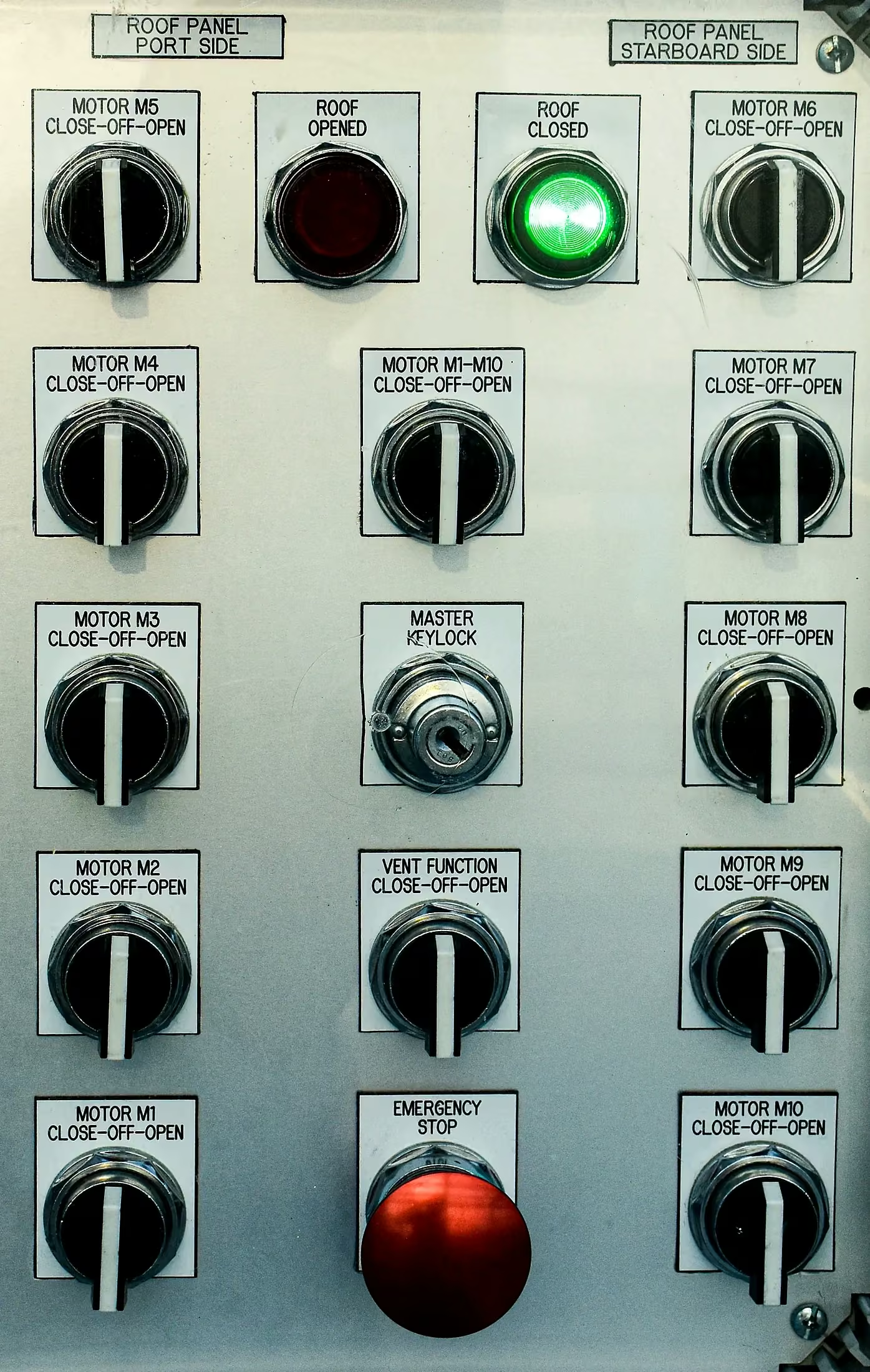
Guard locking
Controlled release where a hazard remains after a stop request.

Light curtains
Open access protection where the process and stopping time permit it.

Laser scanners
Configurable field protection for open and changing access zones.

Safety controls
Logic, diagnostics and outputs matched to the required function.
A clear route to completed guarding
Know what happens from the first visit to final handover.
One coordinated process keeps your access requirements, machine controls, installation programme and documentation aligned.
See how your project will run- 01
Survey and task review
Machine, hazard, reach routes, people, process and constraints.
- 02
Safeguarding concept
Guard line, access strategy, devices and intended safe response.
- 03
Detailed engineering
Mechanical design, component selection and interface definition.
- 04
Manufacture and installation
Fabrication, site coordination, fitting and controlled modifications.
- 05
Testing and handover
Functional checks, recorded results, drawings and maintenance information.
Common production challenges
See how different machines call for different guarding approaches.
Explore example scenarios for robotics, conveyors and established packaging lines. Your solution will be developed around your own machine, tasks and site.
Explore guarding examples →
Project profile 01 · Robotics
Robot palletising cell with controlled operator access
- Challenge
- Routine pallet removal alongside automatic motion
- Approach
- Perimeter guard, monitored gates and zone control
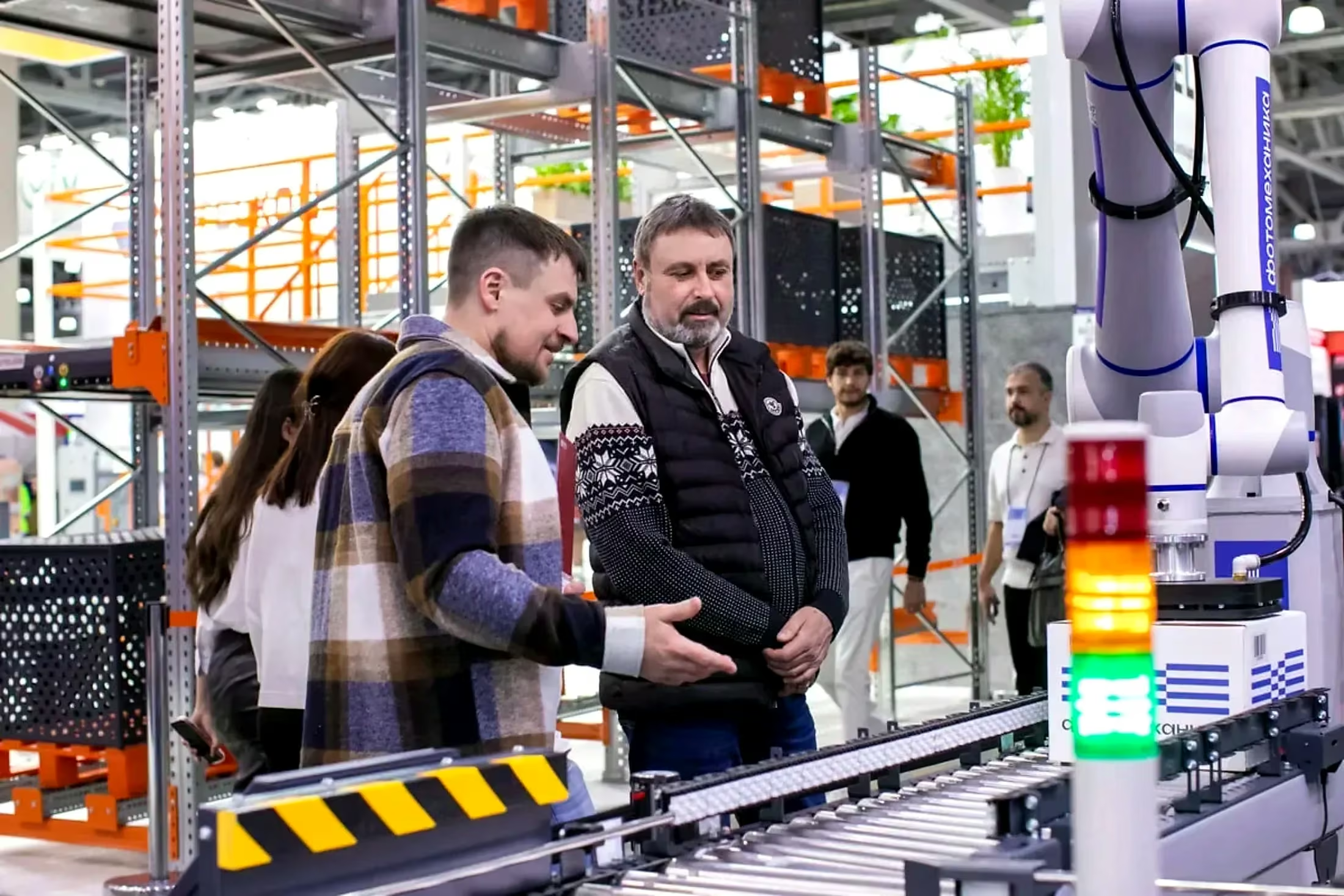
Project profile 02 · Logistics
Conveyor transfer line and material openings
Review profile →
Project profile 03 · Packaging
Retrofit guarding around an established line
Review profile →Built for your production environment
Guarding that respects the way your site operates.
Hygiene, cleaning, material flow, high-speed automation and heavy process equipment all affect the right solution. We adapt the guarding to your process rather than forcing your process around a standard kit.
See solutions for your industry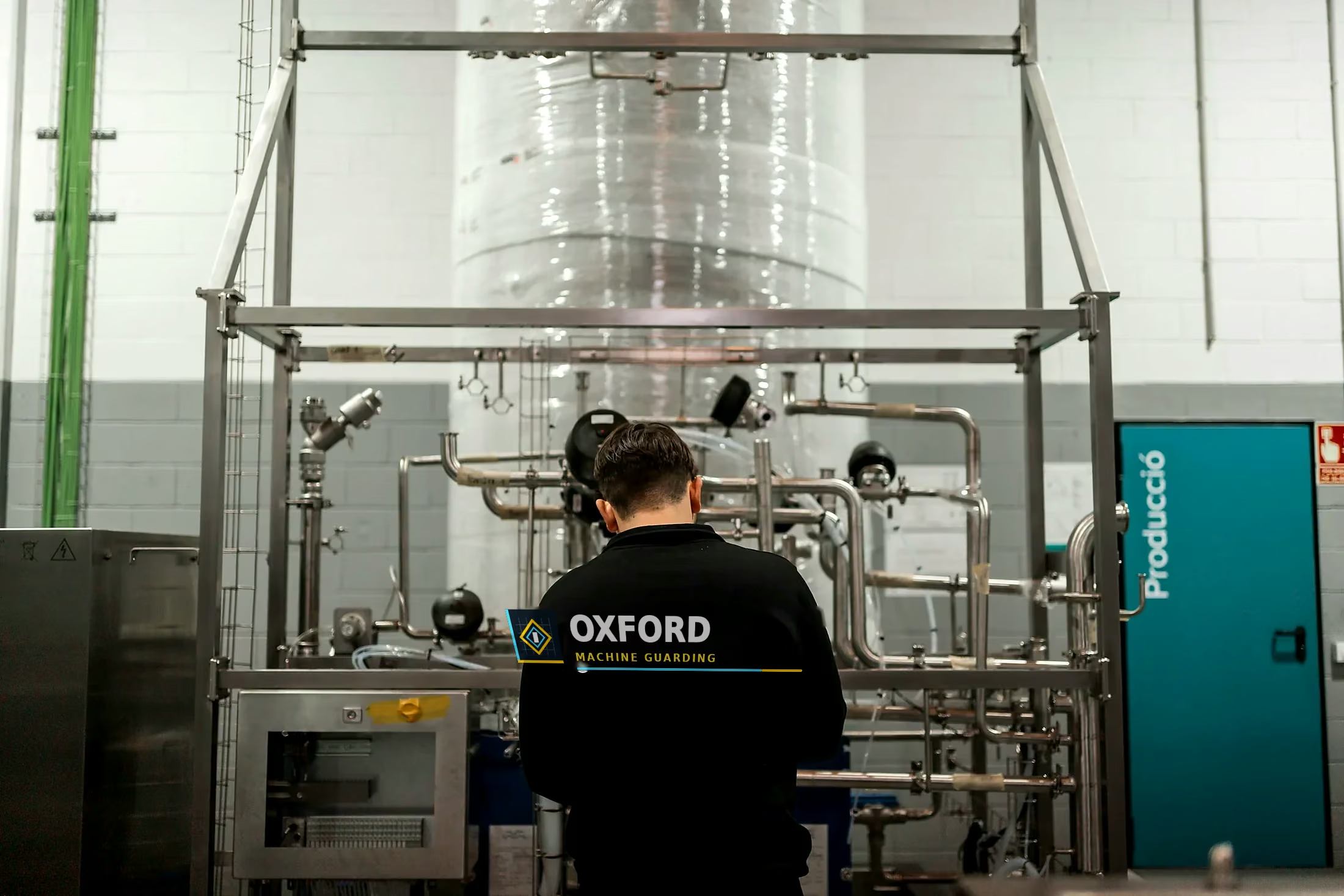
Oxford Machine Guarding site surveyYour machine · your tasks · your access needs
Confidence after installation
Guarding that works for your people and production.
We design around how your team operates, cleans, clears faults and maintains the machine. You receive a clear guarding basis, recorded checks and practical handover information for ongoing inspection and maintenance.
Understand your PUWER duties→See the standards we design around→What you receive at handover→Plan a machinery modification→
Every project is assessed individually. We explain the guarding, testing and documentation scope before work begins.
Advice for your next project
Clear answers to help you plan safer machinery.
Guide · 12 min
Robot cell guarding: a complete project guide
How access, fencing, sensing and control functions fit together.
Read guide → Method · 10 minHow to carry out a machine guarding risk assessment
A practical route from hazard identification to safeguarding concept.
Read guide → Comparison · 8 minSafety light curtain or laser scanner?
Compare access pattern, field shape, stopping distance and environment.
Read guide → Retrofit · 9 minRetrofitting guarding to older machinery
What to examine before modifying an established machine and control system.
Read guide →What is machine guarding?+
Machine guarding combines physical barriers, protective devices and related controls to prevent or control access to machinery hazards. The correct arrangement depends on the hazard, access tasks, reach routes and stopping behaviour.
Can existing machinery be retrofitted with modern guarding?+
Yes. A retrofit can add physical guards, controlled access and updated safety functions, subject to a review of the existing machine, controls, intended use and maintenance tasks.
How is a robot cell normally safeguarded?+
A robot cell may combine perimeter guarding, monitored access, presence-sensing devices, emergency stops, reset controls and a validated safety control function. The architecture must be developed around the application and foreseeable access.
What information helps with a guarding quotation?+
Useful information includes photographs, a layout, machine dimensions, hazard locations, access requirements, cycle behaviour, stopping time, control details and the project location.