
Establish the baseline
Collect manuals, drawings, previous assessments, incident history and known modifications. Photograph the machine before work.
Observe operation and intervention
Older machines often rely on informal techniques for setting, feeding, clearing and maintenance. These tasks must be understood before guarding is designed.
Assess mechanical and control condition
A new guard may expose limitations in braking, contactors, relays, wiring, stop performance or isolation. Include control upgrades where the safety function requires them.
Define the project boundary
State whether the work is a local guard replacement, safety-system upgrade, change of intended use or substantial machine conversion.
Design for the existing machine
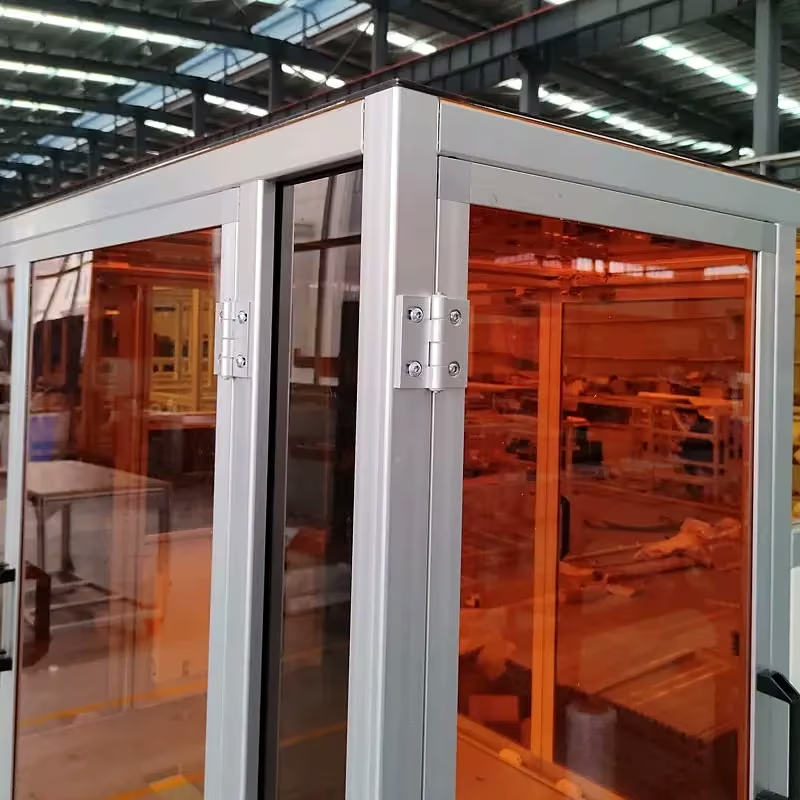
Use independent frames where machine structure is weak, avoid obstructing lubrication or adjustment and provide controlled access to real service points.
Plan installation and rollback
Coordinate shutdown, removal, drilling, wiring, testing and production return. Protect evidence and keep changes under revision control.
Validate and hand over
Test all safety functions and inspect fixed guarding. Train operators and maintenance personnel on changed access, reset and isolation.
Plan future maintenance
Record components, spares, inspection intervals and configuration backups so the retrofit remains supportable.
Project checklist
Points to confirm
- Original information collected
- Actual tasks observed
- Control condition assessed
- Modification boundary defined
- Stopping performance checked
- Guard access designed
- Installation shutdown planned
- Functions validated
- Documentation updated
- Inspection schedule set
How Oxford Machine Guarding can help
We can survey the equipment, define the guarding and safety-system scope, develop the design, supply and install the solution, and provide testing and handover records appropriate to the agreed project boundary.
This guide provides general technical information. It is not a substitute for a machine-specific risk assessment, legal advice or verification by the responsible dutyholder.
