
Reach and cell boundary
Set the perimeter from robot, tooling, workpiece and ejection envelopes—not the nominal robot reach alone.
Industry application
Automated cells bring together robot movement, tooling, fixtures, conveyors and multiple operating modes. Safeguarding must control entry without preventing recovery, teaching and maintenance.
System intent
Automated cells bring together robot movement, tooling, fixtures, conveyors and multiple operating modes. Safeguarding must control entry without preventing recovery, teaching and maintenance.
We develop the guarding arrangement in the context of machine movement, product flow, operator behaviour, cleaning and foreseeable intervention. The scope is then defined clearly for detailed engineering and installation.
Key engineering decisions
These points are reviewed together because a change to access, stopping or production flow can alter the required safeguarding approach.
Define the safeguarded space around robot reach, tooling, payload and adjacent machinery.
Plan automatic, teach, recovery and maintenance access with appropriate control conditions.
Determine which parts stop together and how material or operators pass between zones.
Prevent restart while a person could remain inside or out of view.
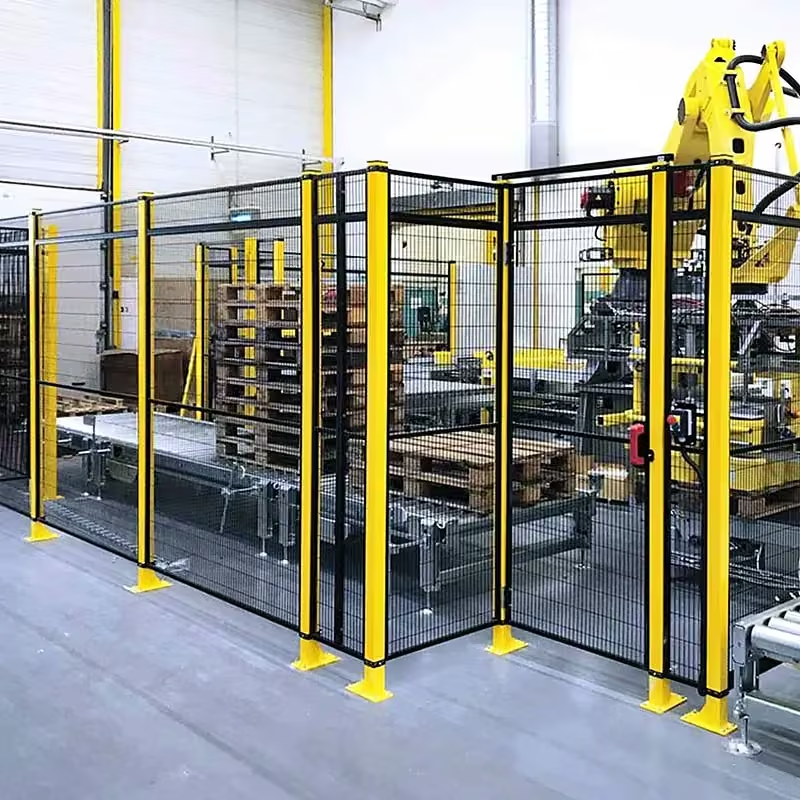
Application review
Typical project output
The precise deliverables are agreed before work proceeds and depend on whether the project covers mechanical guarding only or an integrated safety-system modification.
Application-specific priorities
Robot safety is not defined by the fence alone. The safeguarded space, transfer openings, access gates, protective devices, teaching and maintenance modes, reset, zone control and unexpected restart prevention must work together around the application.
Set the perimeter from robot, tooling, workpiece and ejection envelopes—not the nominal robot reach alone.
Design gates, locking, escape and reset around setup, teaching, clearing and maintenance tasks.
Control conveyors, pallet openings, turntables and other routes through which a person could enter the cell.
Start with the hazard, access task and stopping behaviour
Send photographs, a layout or a short description. We will help define the survey, design and integration scope.
