
At a glance
Key points
- Show the whole machine and close-up hazards.
- Describe production, cleaning, clearing, setup and maintenance access.
- State the required project boundary: survey, design, supply, installation, controls and validation.
- Identify floor, space, hygiene and shutdown constraints.
- Mark assumptions and unknowns so they can be resolved before final price.
1. Photographs and video
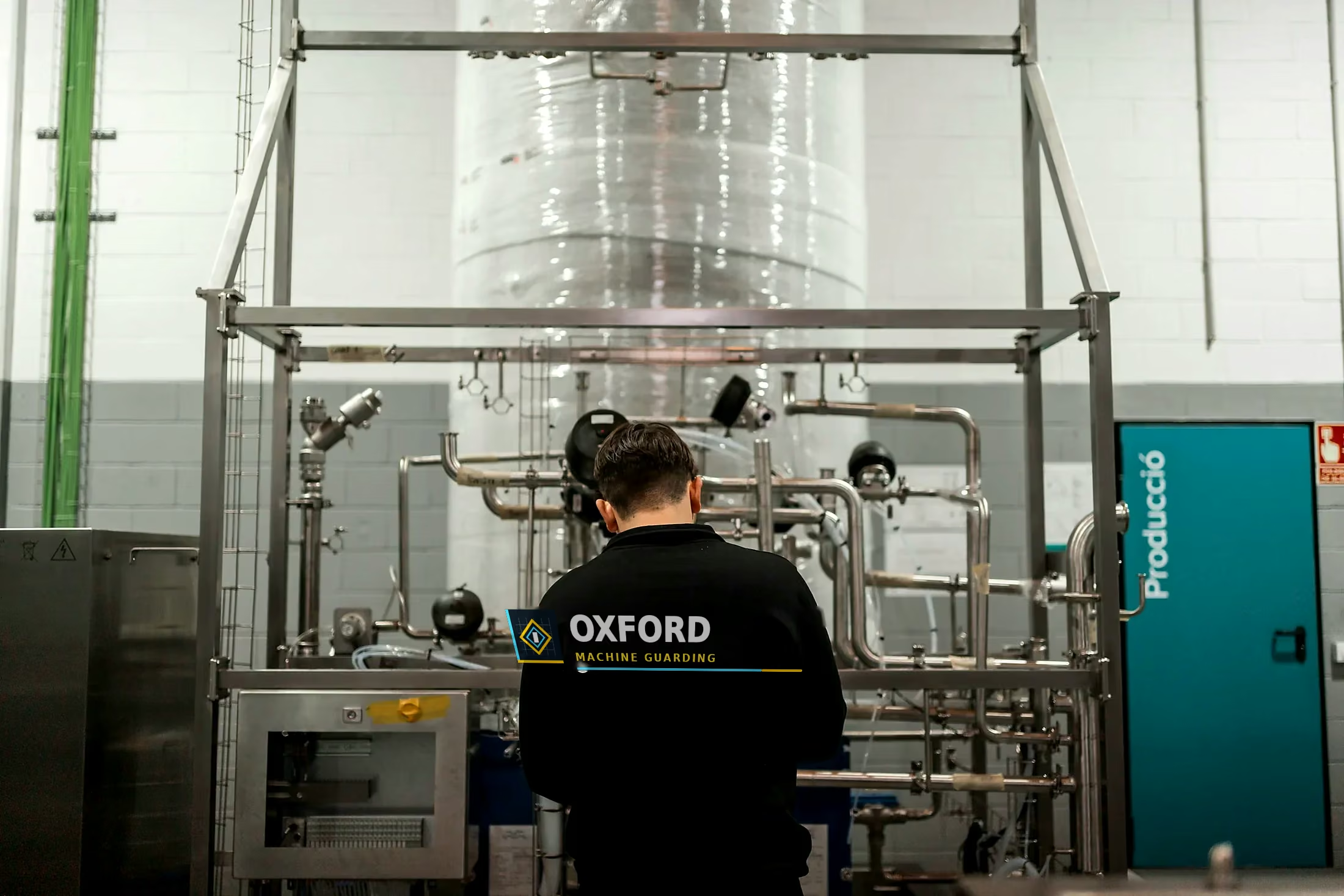
Take a wide image from each side, then close-ups of access points, drives, tools, openings, existing interlocks, control panels and floor interfaces. Include a scale reference or dimension. A short video of the cycle can reveal movement and access that still images miss, but do not film people taking unsafe risks.
- Full machine and surrounding space
- Hazardous movement and tooling
- Operator loading and unloading position
- Maintenance and cleaning routes
- Existing doors, panels and safety devices
- Conveyor, chute and service penetrations
- Control panel and machine identification plate
- Floor, platform and overhead restrictions
2. Machine and process information
| Information | Why it matters |
|---|---|
| Make, model, serial and year | Helps identify documentation, machine configuration and legacy issues. |
| Product and production rate | Defines movement, transfer openings and downtime sensitivity. |
| Operating modes | Setup, manual, automatic and maintenance modes may require different access controls. |
| Hazard description | Determines guarding strength, distance, containment and stopping needs. |
| Access frequency | Drives the choice between fixed, movable, interlocked or presence-sensing protection. |
| Cleaning and environment | Influences materials, finishes, panel type and hardware. |
3. Controls and safety information
For an interlocked or protective-device project, provide electrical drawings and photographs of the control panel. Identify the standard PLC, safety relay or safety PLC, existing network, spare inputs and outputs, panel space, emergency-stop circuit and any known safety calculations.
State whether the customer, original machine builder or Oxford Machine Guarding will own the control design and software change. Unclear responsibility is a common source of quotation gaps.
4. Site and installation constraints
Include the site address, access route, doorway sizes, lifting restrictions, floor condition, work permits, hygiene rules, working hours and available shutdown. Say whether production equipment can be moved and whether drilling or welding is allowed.
Where work must be phased, describe the safe interim state required between visits. If the machine is connected to a line, identify upstream and downstream ownership.
5. Define the expected deliverables
Ask the quotation to state what is and is not included. A complete project may cover survey, risk review, concept, drawings, guarding manufacture, protective devices, electrical work, software, installation, functional testing, stop-time measurement, manuals and as-built records.
Use the same scope when comparing suppliers. A quotation that excludes installation and safety integration is not directly comparable with a turnkey proposal.
How Oxford Machine Guarding can help
We can survey the equipment, define the mechanical guarding and safety-system scope, develop the design, supply and install the solution, and provide testing and handover records appropriate to the agreed project boundary.
Important: this guide provides general technical information. It is not a substitute for a machine-specific risk assessment, legal advice, or verification by the responsible dutyholder.
