
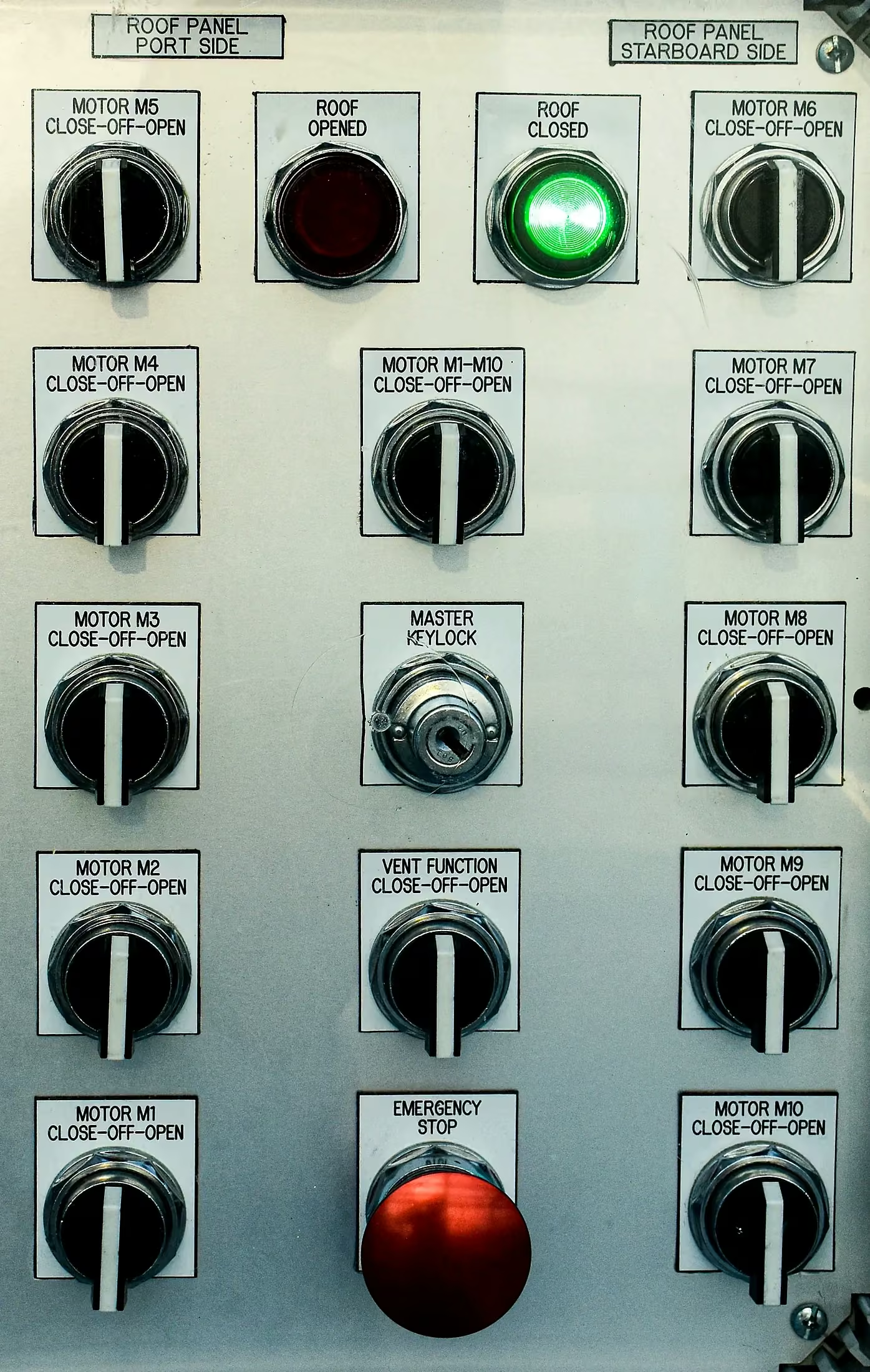
Understand every restart route
A machine may restart from local buttons, a central line controller, an HMI, a remote command, restored power or an automatic sequence.
- List local and remote start commands
- Review automatic line and upstream/downstream signals
- Include power and communications restoration
Separate safety reset from production start
Reset acknowledges that a safety condition has been cleared. It should not automatically start hazardous movement unless the application has been specifically designed to permit this.
- Use clear control labels
- Locate reset outside the hazardous area
- Maintain visibility or add occupancy controls
Address whole-body access
Where a person can enter a safeguarded space, closing a door may not prove the area is clear.
- Provide escape release where needed
- Use personal-key or trapped-key measures where appropriate
- Consider inside reset or presence-detection strategies
Test foreseeable faults and recovery
Validation should include interrupted cycles, multiple open guards, power loss, communication faults and fault reset.
- Confirm safe state is maintained
- Check diagnostics guide recovery correctly
- Verify restart requires the intended deliberate actions
Apply the guidance to the specific machine.
This guide supports early decision-making but does not replace a project-specific risk assessment, safety-system design or validation. Machine condition, tasks, controls and modification scope can change the correct solution.
Questions
Direct answers.
Can closing an interlocked guard restart a machine?+
It should not do so unless the risk assessment and safety requirements specifically support automatic restart and the relevant conditions are met.
Where should the reset control be positioned?+
Outside the safeguarded area, with a view of the area or supported by another suitable way to confirm it is clear.
Does an emergency-stop reset start the machine?+
Resetting an emergency stop should restore readiness, not initiate hazardous movement by itself.
